
Keep One Place to Stop
Headland Changes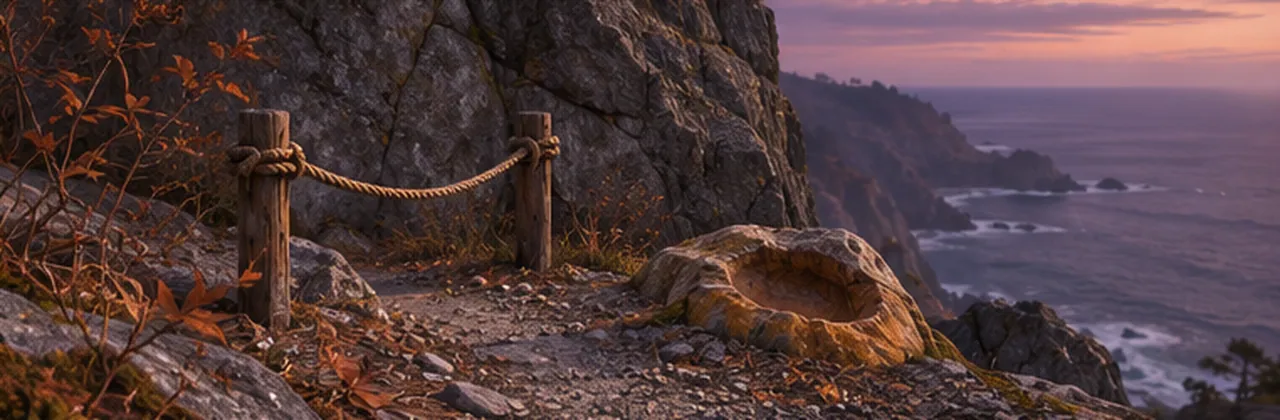
Find a flat part of the trail before the corner
A short piece of even ground sits between a steep wall and the first line of the old fence. Farther along, the path bends where the tip of another post becomes visible. The original route advanced to that turn once the first post had been recorded. A person could see enough to make a guess about it, but there was no place to wait and test the view before reaching the bend.
Bring a place to stand into the picture
The revised scene moves a flat amber stone toward the inside of the track. From here you can see half of the earlier fence while looking over the shoulder of rock toward the second section. A short marker beside the stone matches another of the same height near the bend. Either one can be found again as the ranger changes which way they are looking. The place to stop matters because it keeps both of those bearings nearby.
Make a stationary view useful
Earlier designs held the camera in place while the pine needles and surf continued to move. The position showed the general shape of the shore but left the path hidden. We changed the height of the camera to show a thin strip at the foot of the rock. The next post appears to the right of it. Turn around and the farther section moves out of view, while a trace of the first post stays visible through the same narrow space.
Start the longer patrol with the same clue
Trace the Surf Fence uses the flat place after a short approach from the darker side. There is a separate case where you can return here after seeing the fence from farther out. The Distance between the Posts gives the two markers a recognizable relationship from both positions. Stand at the stone and try to place the nearer post before reading the gap at the corner. This links the movement from one side to the other without showing all of the trail at once.
Give a brief change in the wind enough room
The quiet spot lies just beyond the part of the tree that moves through the current view. Its presence lets a player notice the change and choose when to go back for the post. If the movement in the branches becomes stronger, the older landing of the marker stays near the lower edge of the image. The new rail will still be visible for a moment before the tree’s shadow moves past it.
Adjust the view at the second stop
There is a different flat space on the return from the higher trail. Turn there to see the point above the older rail before the sea comes into the frame. The far boat is absent from that angle. A lower dark corner retains a useful position when the sound grows loud, as discussed in The Surf Sounds Closer. That space gives a pause for a different reason and should not copy the arrangement of the first marker exactly.
Measure which place the player remembers
After one traversal, ask the ranger to return to the earlier stopping place without displaying the route map. A person who recognized the stone can place it before they see the first post again. A person who watched the rail may put it close to the space between the two pieces of fencing. The trial needs enough time for both to check their initial guess against the scene.
Keep one version of the wait
Headland Changes records the shorter earlier approach and the extra pause in the current one. The ability to stand still contributes to the order of the next decision, even though the total path remains the same length. We want to confirm that players who take the later route can place the stop as readily as someone who arrives from below.