
Trace the Surf Fence
Cliff Routes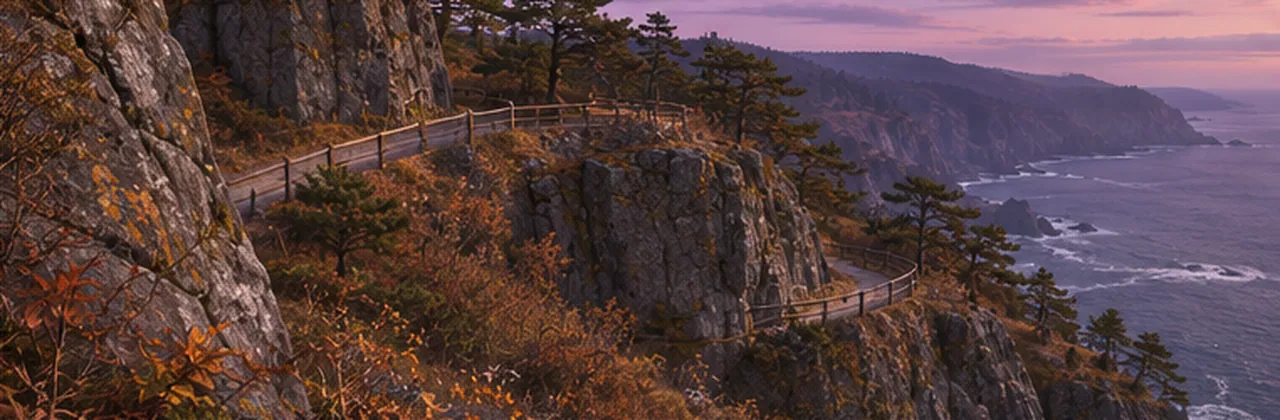
Look along a broken stretch of rail
A narrow path follows the edge of the fictional cape before turning inward above a darker part of the sea. The old fence appears in long arcs interrupted by a point of rock. The ranger begins where the whole first arc is visible. Carry the outline of its far post toward the bend. When the nearer rail moves out of sight, a new white stripe in the surf can make the scene appear to open in a different direction.
Stop where two segments overlap in the picture
The first new post comes into view above the shoulder of rock. It seems close to the end of the first rail from that angle. Walk to a flatter position where you can see part of the ground beneath it. The Distance between the Posts follows how the new view preserves enough of the first edge to measure the turn. If the two posts still line up, you can stay near the rock and use a darker shape at its foot.
Choose a place to make the next record
The patrol map has two positions to record before the second turn. One is beside a flat stone just beyond the old fence. The other is farther back beneath the shadow of a pine. Keep One Place to Stop observes changes made to one of those views. A progression can begin from either angle, as long as the ranger can tell which stretch of the railing will remain in sight.
Read the surface below the sound
Water comes into view sooner as the path turns away from the pines. The white sound of surf seems to come from near the next post. Look down where dark rock extends toward the boat below and shows where the foam has actually reached. The Surf Sounds Closer explains how a fixed piece of the headland helps make that judgment. A different sound position need not make the view of the fence change.
Return along a recognizable section
After the second turn, the game brings you to a wider place where you can trace the two rails in the opposite direction. One remains visible for a longer time than it did on approach. The older rock and the place where its base meets the path help connect the rests. Returning to the first mark preserves a view of both the coast and part of the newer rail farther away.
Keep dark objects and light motion apart
The outline of the fence appears warm at first and becomes almost black against the sea. The surf keeps a thin reflective edge beneath it. Some of the lower foliage shadows are blue and violet under the last light. The movement of water should feel broad and slow next to a small movement near a dark post. That difference suggests where to look when returning through a turn.
Development status
The current project is an original prototype around two bends in a fictional patrol. It tests which parts of a path people can remember after the sea becomes visible. Cliff Routes gives the initial wider cover before opening the longer case. An expanded trail might return across a high section above the pines. The next test should first make sure the two posts already available remain recognizable from either direction.