
The Surf Sounds Closer
Headland Changes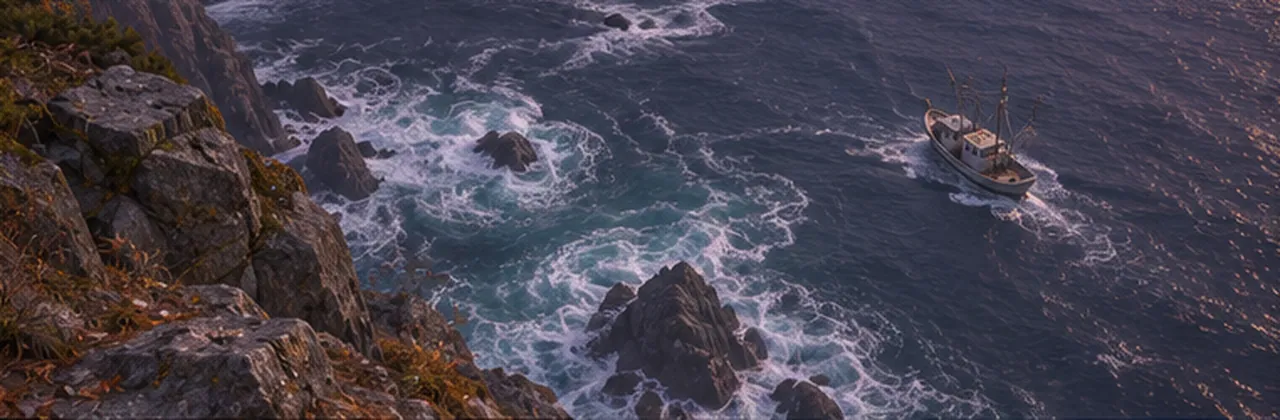
Keep the boat in the early frame
The headland is high above the place where the surf breaks along the rocks. From the cliff path a tiny boat drifts near a distant white line. Our original test made the surf become loud very quickly around the near turn. The sound suggested that the water had moved much closer, but the part of the coast that fixed the distance had already left the picture. It became hard to understand where the ranger was standing.
Draw an edge at the end of the near rock
The current view retains a point of dark rock below the first bend. It sits low against the thin line of surf. Even when the louder water surrounds the other sounds, the dark shape stays close to the same position under the trail. You can watch the white edge start on the farther side before hearing the next burst. That little interval separates the feeling of loudness from a visible distance.
Compare a view from under the pines
In the lower picture the tree fills some of the sky. The boat disappears between two boughs while the sound remains strong. A wooden rail seems much closer because it almost reaches the corner of the frame. Follow the outline of the pine until the dark rock becomes visible beyond it. You can find the water from there without depending on the moment the boat reappears.
Keep a second landmark out of the moving water
We moved a short section of rail into the corner of the high view. It offers a different kind of reference from the rock far below. Both shapes remain usable when the foam spreads and makes the sea seem larger. In Trace the Surf Fence, that relation holds as the first bend comes into view. The ranger can look down for a short comparison without losing the actual route along the fence.
Use quiet audio to test the same setting
A scene with the sound turned all the way down still shows when a white crest reaches the rock. We use that view to check what visible signals someone has before the loud change. When the same person walks through with audio, the crest and the related area of the coast can now be placed more easily. Disagreement between an expected sound and the new movement can become part of the scene without confusing the path.
Look for one quiet place to recover
Keep One Place to Stop studies a flat patch where the ranger can compare the old rail with the next one. You can also look down at the rocks from it. The point below the path changes shape slightly as the viewer turns. Keeping part of its outline visible after the loudest event helps describe the distance between the path and the surf. The boat remains useful as a distant reference if it is still in view.
Draw the sea at several distances
The nearest foam appears large against the rocks though it is well below the route. A farther white line moves more slowly beyond the boat. We keep the two separated by a darker portion of water where there is almost no visible movement from above. The picture gives the impression of an open coast without making the direction of the path hard to judge. The low post at the edge of the frame is still as solid as it was at the beginning.
Add the revised scene to the path
Headland Changes preserves the version in which the louder water displaced the feeling of the nearby coast. The next test will place the ranger after the second bend, with a quieter view before the sound returns. The rock and the rail can still help place a larger motion in that view. We can compare how each position tells the same story from a different height.